
Breaking the "Strong" Curse: Navigating Cultural Expectations and Trauma in Black Families
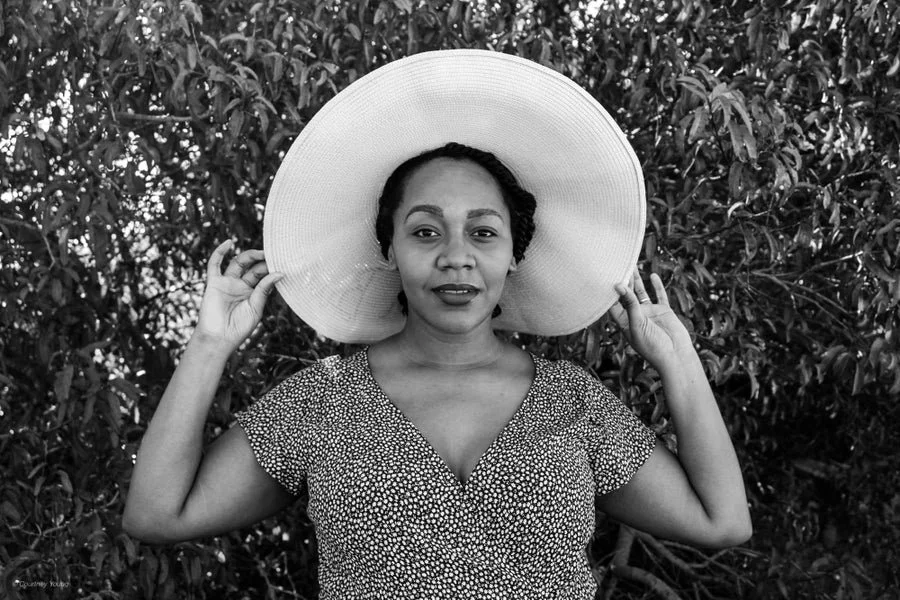
Black women have always been central to the growth of communities, movements, and families. For many black women, they are not only believed to be strong during certain times, around certain people or with specific context. For most black women, it is far more than a personality trait, it’s an expectation. The unwritten expectation to be the one who helps everyone, the one who holds it together, the one who keeps the family together, all while running on empty. Along the way, you learn that your needs are not a priority, to not speak about the pain, to mask your trauma out of fear of weakness and to roll with the punches for the sake of keeping the “peace”. Most times the “peace” we try to keep for everyone else is not inner peace for us.
But where did this expectation come from? Who decided that strength is our burden to carry?
Where Did We Learn to Be Strong?
The “strong” black woman trope is not at all new and thrilling but rather antiquated.
Generations of black women playing the roles of mother, partner, healer, leader, and muse set the groundwork for this expectation. The expectation to be “rock”. From watching our mothers and grandmothers work multiple jobs, tend to the household, raise children, be a dutiful partner, or do it alone, most of us have learned that we must be everything, all at once, all the time. The rules of the mothers then fall onto the eldest daughters who are expected, by default, to help keep the family afloat. Through long nights babysitting, sacrificing playtime, and taking on a handful of chores, the daughters learn that they must be strong too. Passing the torch of strength, survivalism and D.E.Y. (Do everything yourself) has become an unhealthy tradition amongst black women.
The Intersection of Trauma & Culture
What is important to recognize is that these unfair expectations are all trauma responses to systemic unsafety. Historically black women have faced intersectional discrimination especially in the ways of racism and sexism. Reacting to violence, or showing vulnerability is often met with further persecution, abuse, and lack of defense. We have survived the atrocities and oppression through what was intended to be emotional safeguarding. While the intention of our foremothers was to safeguard ourselves, instead it spiraled into a cycle without much reciprocity, fear of expression, and stoicism that was unintended. Through experience and vicarious learning of how to protect ourselves and loved ones, we learned that exhaustion is worth security. Exhaustion became part of the black woman experience. Some might even say that exhaustion is a piece of our heritage.
The Cost of Being Strong
While we honor the experience of our foremothers and remember their sacrifices, we also recognize the damage that self-sacrifice has on our health & moreover our community. The strong black woman schema comes at the cost of fear of vulnerability, hyper-independence and inability to seek help guilt-free. Conditioning to see vulnerability as weakness can make it painstakingly difficult to share emotions with others without fear of abandonment or ridicule. The hyper-independence forces us to believe that we must do things ourselves leading to physical exhaustion. The same hyper-independence harms our relationships through lack of trust and the belief that we are not supported, even if you do have a village.
Suddenly, anxiety and depression creeps in and the hyper-independence turns into headaches, constant fatigue, pain, sleep deprivation, and muscle tension. In addition, depression and anxiety bring along irritability, and silent crying. Repressed child wounds turn into inability to relax and stress turns into hair loss.
These symptoms eventually become a part of a daily routine that many black women were never taught to handle. To others, it is labeled as the “angry”, mean, bad tempered black woman, but in reality it is generations of women drowning sorrows and fear to face the world we are expected to save.
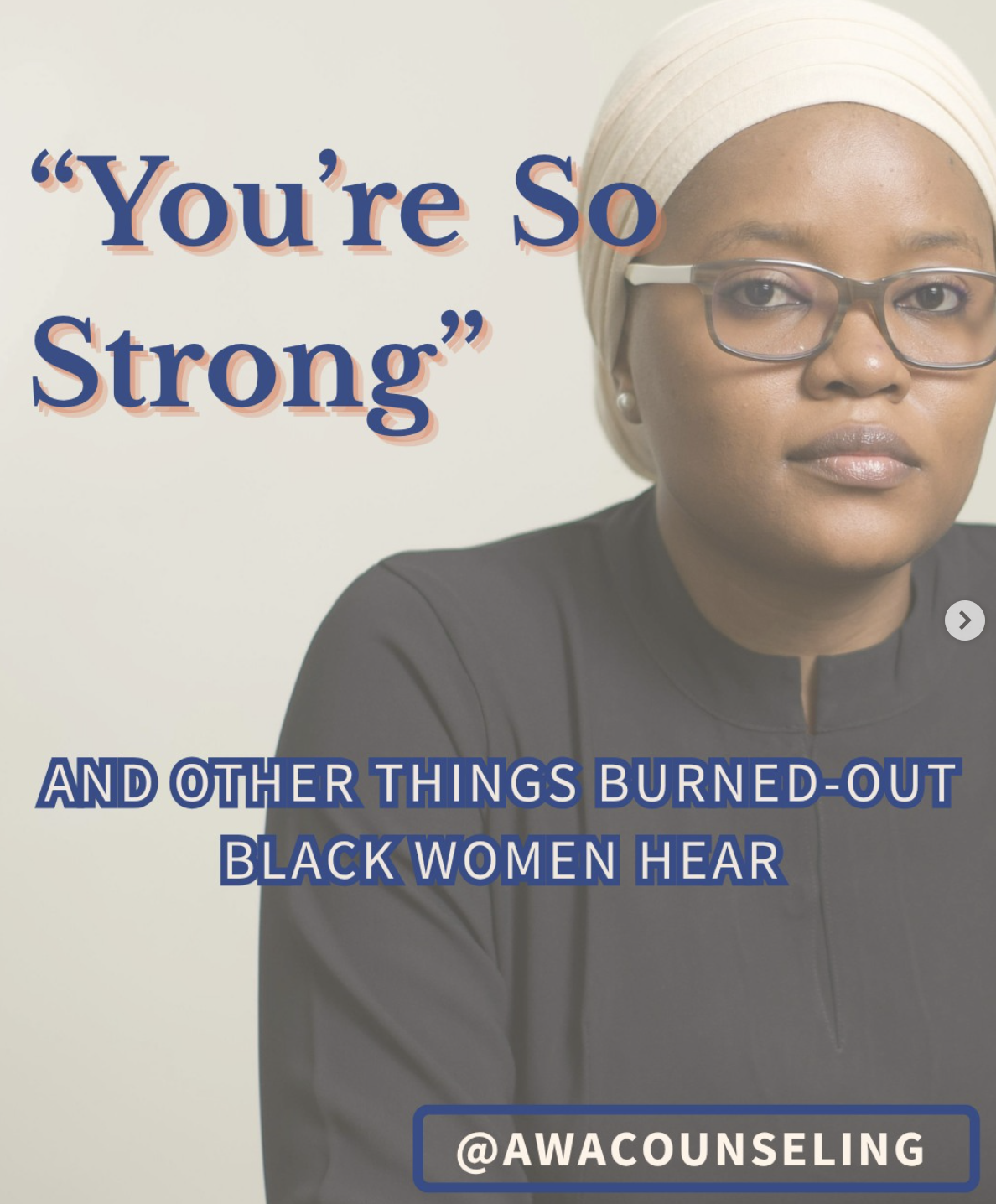
Sometimes the words meant to encourage us quietly dismiss what we’re carrying...
If you’ve heard “you’re so strong” when you really needed rest or help, your reaction makes sense..
Check out this social media post about being the strong one.
Where to Begin?
The silver lining is that you don’t have to go through it alone. AWA Counseling Services has therapists who are ready to help you navigate your stress, trauma, and overall mental health. Our team of Black Women Therapists are not just vaguely familiar with the black woman experience, but we live it. For those who are looking for safe spaces to connect there are other women who would love to support you. When you are ready to take the first steps to break the cycle, we will be here with open arms.
Taking the First Step With AWA Counseling
Reaching out for help is not a sign of failure; it is the ultimate act of strength and self-preservation. At AWA Counseling Services, we specialize in compassionate therapy for millennial moms navigating burnout across PA, DE, and VA. Whether you need a dedicated telehealth space just for yourself or want to heal alongside your partner, our expert clinical team is here for you.
We are proud to be a premier, culturally-affirming practice dedicated to the healing, rest, and liberation of Black and Brown folks, women, and millennials.
We offer:
Individual, Couples, and Group Therapy tailored specifically to your lived experiences and relational goals.
Accessible Online Care across PA, DE, and VA, so you can heal from the comfort of your own safe space.
A Gentle, Attuned Approach equipped with real tools to help you build safety, connection, and radical self-trust.
Visit our therapy for race and cultural expectations page to learn more about our approach, or contact us today to set up a consultation. We've got you.
By Suhayla Millington