
Behind the "Strong Black Woman" Mask: Depression and Suicide Awareness
This Suicide Awareness Month, we're discussing depression in Black women. Learn how to check on the "strong friends" masking their pain and offer safe support.
The "Strong" Schema
Black women are often culturally conditioned to carry the weight of the world, often masking severe emotional exhaustion as resilience and capability. From a young age black girls are taught that they have to be exceptional at everything academics, sports, they way they behavior, socialize, and carry themselves. The emotional toll this takes on a young person is truly never explored. Instead society rewards their over-functioning by labeling them “strong”, “resilient” or “capable”. The problem with this type of trope is that it diminished the capacity to be human and to emotional needs to get erased. Depression in Black women often does not show up the same way as in other groups of people. A lot of times it can look like boerdom (fear of not doing enough), over-functioning, people pleasing behaviors. September is Suicide Awareness Month and the community needs to start checking on the "strong friends" who look like they have it all together and could be suffering from depression.
What Depression Actually Looks Like for Us
Redefining Symptoms: The clinical stereotype of "staying in bed" and being “sad” do not always line up with depression in Black women. The reality of overworking, hyper-independence, perfectionism, and systemic burnout can mask these symptoms as something else. It often shows up a more physical symptoms and less emotional ones.
Depression frequently shows up as somatic symptoms, think fatigue, headaches, muscle tension, digestive issues, or generalized pain. Rather than the person naming sadness or hopelessness directly they may complain of they physical symptoms instead. This can lead to repeated visits to a primary care doctor without depression ever being named as the underlying issue.
Depression can present as irritability, short temper, or a persistent sense of being "on edge". We see this a lot with our clients at AWA Counseling. Symptoms like these are more likely to be labeled as an attitude problem than a mental health concern.
Masking Through Over-Functioning
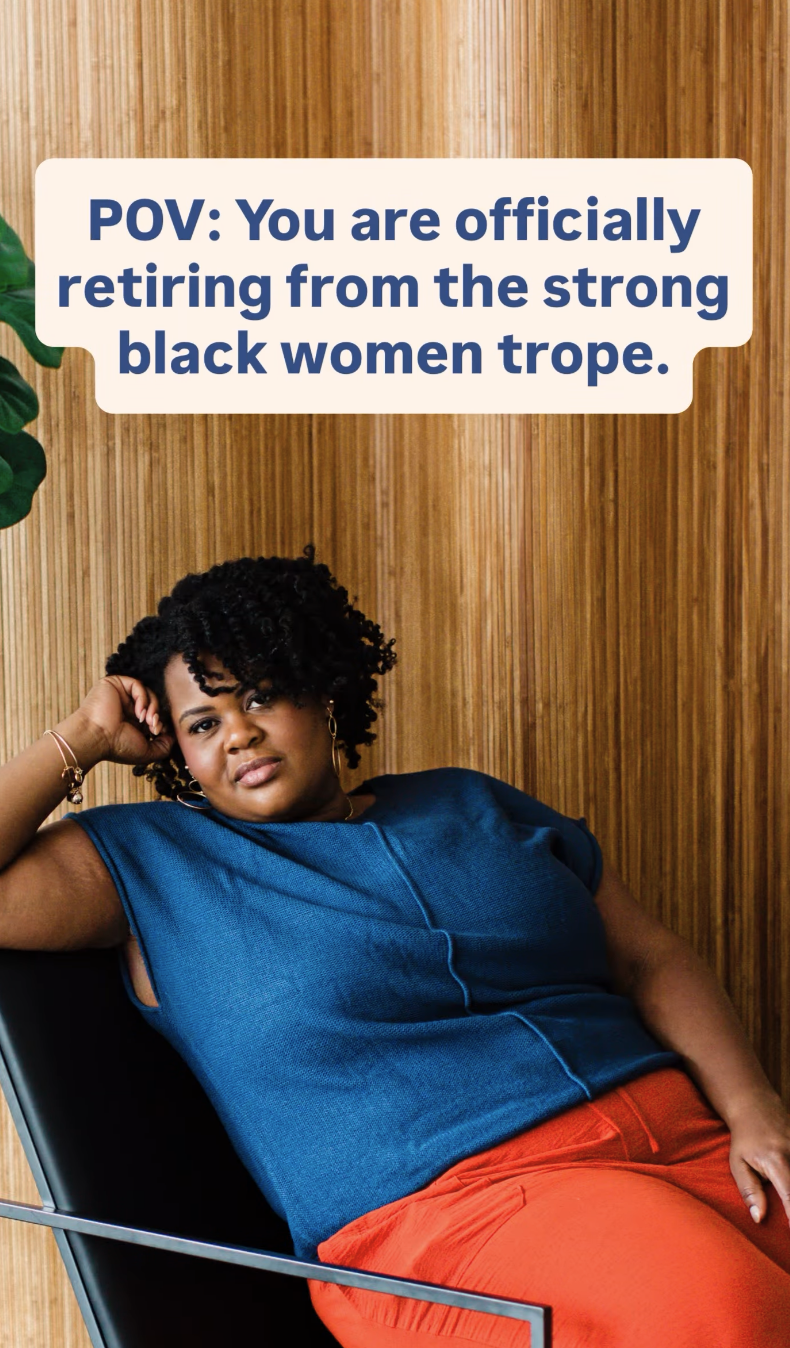
The "Strong Black Woman" trope which we like to define as the cultural expectation to be self-sacrificing, resilient, and unshakeable, often leads women to keep functioning at a high level (working, caregiving, managing everyone else) while internally struggling. You know the term, as it is often used to describe women in our community. Even in our own families with like to label women as strong. Many times I have heard the phrase “but she’s so strong” or “you’re a strong black women, you can handle it”. This makes depression harder to spot from the outside looking in, and harder for the woman herself to name, because slowing down or asking for help can feel like a failure of identity, not just a symptom to treat.
Delayed Help-Seeking and Self-Reliance
Many Black women turn first to other options before considering therapy. Some of our clients come to us after seemingly trying “everything”. We hear things like religious traditions like prayer, talking to family or friends, exercising to mitigate physical symptoms or personal willpower before considering therapy, often due to stigma within the community, historical mistrust of the mental health system, or a belief that struggling privately is safer than being perceived as weak or "crazy."
Because symptoms often present as anger, physical complaints, or high-functioning coping rather than classic depressive markers, clinicians unfamiliar with these patterns may miss the diagnosis entirely or misattribute symptoms to something else (like anxiety alone, or a physical health issue).
Safety Check-Ins & Support
Let me say this plainly, because I need you to hear it without flinching: asking someone directly if they are feeling depression or if they're thinking about suicide does not put the idea in their head. It doesn't cause it. What it does is open a door that person may have been waiting, (sometimes for years) for someone to walk through with them. Silence doesn't protect anyone. Silence just makes sure they carry it alone.
I know we weren't raised to ask questions like this out loud. In a lot of our families, you didn't say "suicide", you said "she's just tired," or "she's going through something," and you prayed about it and kept it moving. It wasn’t discussed further. I understand that instinct. It comes from love, and from a very real history of not trusting outsiders with our pain. But loving someone well sometimes means asking the hard, direct questions.
Support and the Therapist's Role
This isn't a conversation you have to prepare for perfectly, or get exactly right on your own. Our team is comprised of Black Women Therapists and Counselors who get it. Latoya, Suhayla, Tajae, and Adara are trained specifically for moments like this; helping you figure out what you're seeing, how to talk about it, and what support actually looks like next, whether that's for someone you love or for the worry you're carrying yourself.
You don't need to have the right words. You don't need to be sure something is "serious enough." Reaching out for someone else, or to process your own concern is always the right move.
Begin Your Healing Era
With
AWA Counseling
Services
At AWA Counseling, we know how exhausting it is to carry the weight of the world, and we believe you shouldn't have to do it alone anymore. We are proud to be a premier, culturally-affirming practice dedicated to the healing, rest, and liberation of Black and Brown folks, women, and cycle-breakers.
We specialize in compassionate therapy for depression and burnout. Whether you need a dedicated space just for yourself, want to heal alongside your partner, or are looking to find your village, our expert clinical team is here for you. We offer:
Individual, Couples, and Group Therapy tailored specifically to your lived experiences and relational goals.
Accessible Online Care across PA, DE, and VA, so you can heal from the comfort of your own safe space.
A Gentle, Attuned Approach equipped with real tools to help you build safety, connection, and radical self-trust.
If you’re ready to finally put down the armor and get the support you deserve, visit our therapy for depression page to learn more about our approach, or contact us today to set up an appointment. We've got you.